لماذا تهيمن رافعة تويوتا 30 (3 أطنان) على سوق الرافعات المستعملة العالمية؟
Release time: 2026-03-19
In the high-stakes arena of industrial material handling, the decision between investing in brand-new equipment or opting for a pre-owned machine is rarely simple. It is a calculated risk that often boils down to a single, critical question: Can this specific machine deliver consistent, breakdown-free performance under heavy duty cycles, year after year?
For experienced warehouse managers, fleet supervisors, and procurement officers globally, the Used Toyota 30 Forklift has transitioned from being merely an option to becoming the definitive answer to this logistical dilemma. This 3-ton powerhouse balances legendary Japanese engineering with undeniable long-term cost-efficiency. However, achieving E-E-A-T (Experience, Expertise, Authoritativeness, and Trustworthiness) in your purchasing process requires a deeper look than mere brand recognition.
Deconstructing the Legend: The Technical Superiority of the Toyota 30 (3-Ton) Series
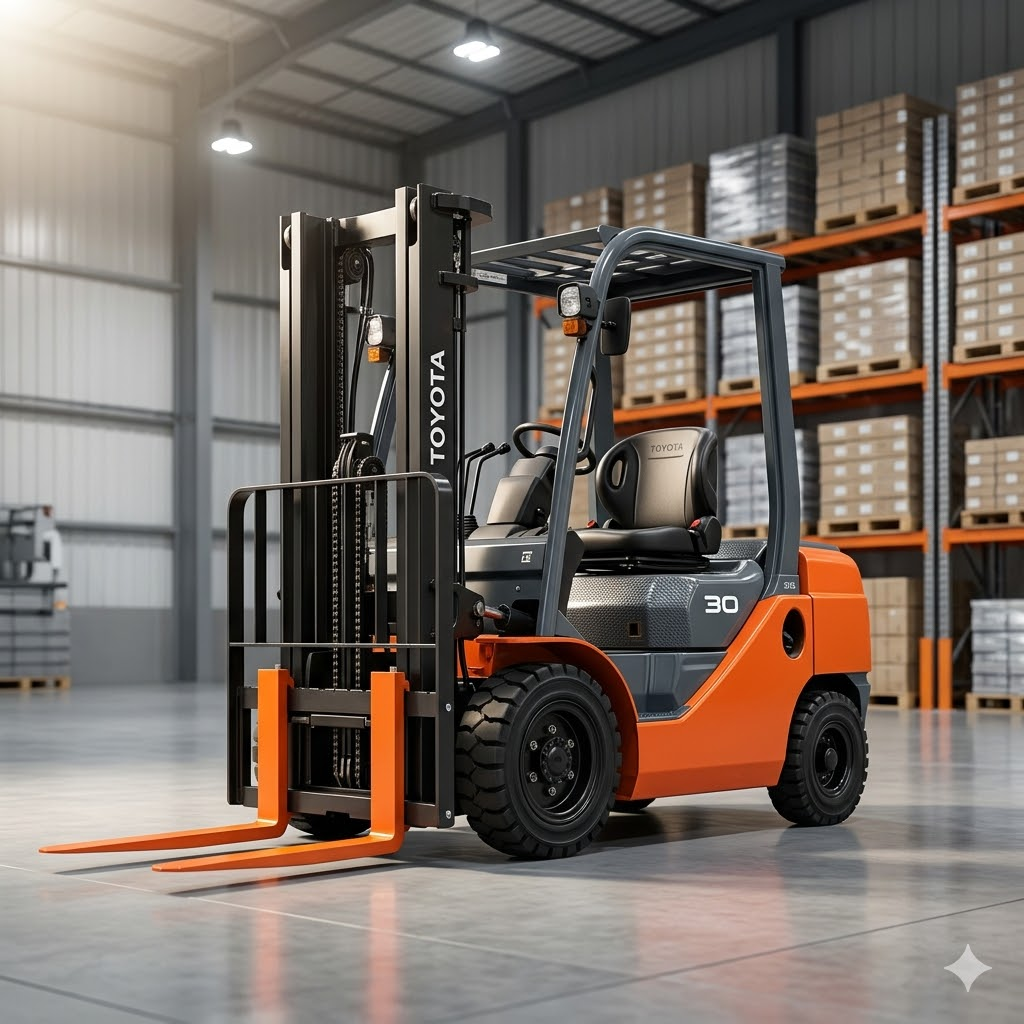
The “30” designation in Toyota’s Internal Combustion (IC) forklift lineup—most commonly manifested in the ubiquitous 8FD30 and 7FD30 diesel models—signifies a 3,000kg (3-ton) nominal lifting capacity. This capacity is the industrial “sweet spot,” adaptable enough for standard warehousing, manufacturing floors, construction sites, and lumber yards alike. What truly sets this machine apart, however, is not just its raw lifting power, but the sustainable Toyota 8FD30 performance when subject to extreme thermal and operational conditions.
Unlike budget-tier alternatives that may look capable on a spec sheet but struggle with overheating during prolonged use, the Toyota 30 series is engineered for 24/7 duty cycles.
Engine Durability: Most used units utilize the legendary Toyota 1DZ-II or 2Z diesel engines. These are low-RPM, high-torque workhorses featuring cast iron cylinder blocks and geared timing trains (rather than belts), minimizing catastrophic failure points. They are notoriously tolerant of varying fuel qualities, a crucial factor for international buyers.
Hydraulic Efficiency: The hydraulic system utilizes tandem pumps that separate steering power from lifting power. This ensures that even when lifting a full 3-ton load, steering remains light and responsive. The mast structure itself features internal hosing and cushioned cylinders, reducing wear and operational noise.
Cooling System: A key factor in Toyota 8FD30 performance is its advanced cooling package. The radiator design maximizes surface area, and the fan is engineered to pull air efficiently through the engine bay, a critical feature when operating in confined spaces or high ambient temperatures.
The Financial Calculus: Why a Used Toyota 30 Trumps a New Budget Brand
It is a remarkably common procurement trap: purchasing a brand-new, low-cost forklift to satisfy immediate budget constraints, only to realize within 24 months that the “Total Cost of Ownership” (TCO) has spiraled out of control. This is where the 3 Ton Diesel Forklift from Toyota proves its value over time.
Unrivaled Residual Value: A Toyota forklift is essentially currency in the industrial world. Due to their reliability and the global availability of parts, a well-maintained Used Toyota 30 retains more than 60% of its initial value even after a decade of service. Contrast this with low-cost “no-name” brands whose resale value plummets the moment they leave the showroom floor, primarily due to the difficulty in sourcing proprietary parts.
Availability of Parts and Expertise: Because there are hundreds of thousands of these units in operation worldwide, spare parts (both OEM and high-quality aftermarket) are universally available. Furthermore, almost every experienced forklift technician globally knows how to diagnose and repair a 7FD or 8FD unit, reducing specialized labor costs and downtime.
The Safety Factor (SAS & OPS): Toyota’s proprietary “System of Active Stability” (SAS) and “Operator Presence Sensing” (OPS) are not just marketing jargon; they are critical electro-mechanical safeguards. SAS utilizes sensors to monitor the forklift’s center of gravity. If it detects a potential lateral tip-over condition, it automatically locks the rear axle swing, stabilizing the chassis. It also controls the mast tilt angle and speed based on lift height and load weight. These features greatly reduce accident liability—something a budget-new machine often lacks.
The Engineer’s Checklist: How to Inspect a Used Toyota 30 Before Purchase
When sourcing from a reputable global supplier like YQ Excavator, the inherent risks of buying used are minimized, but a professional inspection remains vital. Our senior engineers recommend focusing on specific technical indicators rather than cosmetic wear.
Engine Health (Cold Start): Request a cold-start video. A healthy Toyota diesel engine should crank quickly and settle into a deep, rhythmic hum without excessive hunting or smoke. Blue smoke indicates oil burning; thick black smoke suggests fuel system issues.
Transmission Stall Speed Test: This is crucial. Engage the parking brake, start the engine, and with the foot brake firmly pressed, shift into forward gear and accelerate fully for no more than 5 seconds. The engine RPM should rise to a specific “stall speed” and hold. If the RPM continues to climb toward the redline, the transmission clutch packs are slipping, signaling an expensive rebuild.
Mast and Carriage Tolerance: Inspect the channel sections of the mast for scoring. Have an operator raise the carriage without forks and check for lateral play. Significant movement indicates worn-out load rollers or bushings, which affects load stability and safety.
Hydraulic Cylinder “Drift”: Raise a rated load (or a significant weight) a few feet off the ground and tilt the mast fully back. Release the controls and watch the tilt cylinders and lift chains for 60 seconds. A well-maintained Used Toyota 30 Forklift should hold its position perfectly without any visible “drifting” (creeping downward or tilting forward), ensuring the hydraulic seals are intact.
Where to Source Reliable Used Toyota Forklifts for Global Export?
The primary challenge within the used equipment market isn’t the machine itself, but the transparency of the transaction. International buyers face unique risks involving shipping logistics, customs documentation, and verifying the true condition of the unit.
YQ Excavator has addressed this industry-wide trust deficit by shifting the model from mere sales to a comprehensive “Expert-Verified Procurement Service.” We do not just export forklifts; we export proven operational hours. Every Used Toyota 30 Forklift in our inventory undergoes a rigorous 100-point inspection before it is listed. We provide full testing videos, hydraulic pressure test results, and maintenance logs. We understand that in the modern supply chain, predictability is paramount. By specializing in low-hour, original Japanese-manufactured Toyota units, we guarantee that the forklift arriving at your facility is ready to begin its next 10,000 hours of service from Day 1.